Skip to content Skip to footer
0 items - $0.00 0

Image

Why Buying Land Titles On This Island May Suit You


Grand Island: A Virtual World of Prestige and Prosperity

Grand Island in The Realm Virtual World is a dazzling destination, where opulence and innovation intertwine to create a truly extraordinary virtual experience. As one of the most iconic islands in The Realm, Grand Island is synonymous with luxury living, casinos, hotels, breathtaking landscapes, and economic opportunity. Its urban design is both majestic and modern, with sprawling developments tailored to suit the needs of residents and visitors alike.

The Casino Island

The island is characterized by its impressive hotels, casinos, yacht clubs, architecture, including ultra-modern skyscrapers, elegant residential areas, and thriving commercial zones. The seamless integration of nature and technology gives Grand Island an unmatched aesthetic appeal, envision lush green parks surrounded by futuristic structures and meandering waterways that reflect the shimmering lights of the skyline. Vibrant marketplaces offer high-end shopping and gourmet dining experiences, complemented by serene retreat spaces where tranquility takes center stage. Grand Island is also known for its thriving entertainment hubs, which host cultural events, concerts, and immersive activities that bring its digital community together.

Prime Property and Growing Demand

Grand Island’s land titles represent some of the most coveted real estate in The Realm. Positioned in areas of high foot traffic, each parcel is ideal for building exceptional virtual businesses, residential communities, or leisure destinations. The island’s popularity ensures a consistent influx of visitors, making it a hotspot for entrepreneurs looking to establish their presence in the digital world.

Land Title Ownership On Grand Island

Early ownership of land on Grand Island is not just an investment, it’s a strategic move. Properties here are scarce, and with each passing day, their value increases. Once sold out, titles will likely enter the resale or leasing market at prices well above their original cost. This scarcity creates an urgent opportunity for forward-thinking investors to secure their stake before the competition intensifies.

Blockchain Security and Transparency

All land titles on Grand Island are securely registered on the blockchain, guaranteeing absolute transparency, protection, and immutability. Owners can rest assured knowing their investments are safe from fraud or disputes. Blockchain technology also simplifies transactions, enabling quick and effortless transfers between buyers and sellers.

Additionally, blockchain-powered smart contracts automate ownership rights and operational agreements, making it easy for developers to monetize their land. Whether it’s through leasing, retailing, or digital commerce, blockchain technology ensures efficiency, reliability, and growth potential

Long-Term Value and Economic Growth

As Grand Island’s development progresses, its land values are expected to skyrocket. With businesses, cultural centers, and entertainment venues flocking to the island, demand will continually outpace supply. Landowners have the unique opportunity to benefit from this economic boom—whether by establishing ventures that attract visitors, leasing properties for steady income, or auctioning land for potentially lucrative returns. The combination of scarcity, high demand, and vibrant activity guarantees long-term value for those who invest early.

Why Buy Virtual Properties On Grand Island?

Grand Island is not just a virtual destination, it’s a cornerstone of opportunity, innovation, and community in The Realm. Its unparalleled offerings and investment potential make it an absolute must for those looking to build their legacy in the virtual economy before the casino and hotel owners in Vegas, Mississippi, Atlantic City find out about The Realm Land Titles available. If you missed the .com era, missed out on the Bitcoin Opportunity, missed the NFT boom….Don’t Miss out on The Realm Pre-Construction Blox and Land Title Ownership.

Leave a comment

How tokenization of properties in The Realm™ create value

Commodities Like Gold, Rubies, Emeralds, Diamonds and even ENERGY can be Tokenized through cryptocurrencies IN FRACTIONAL CURRENCY.

Tokenization of virtual land transforms digital real estate into blockchain-based assets, enabling fractional ownership, increased liquidity, and enhanced security. This process allows individuals to buy, sell, and trade portions of virtual land without requiring full ownership, making digital real estate more accessible. By leveraging blockchain technology, tokenization ensures transparent transactions, prevents fraud, and provides immutable proof of ownership. Additionally, tokenized virtual land can be integrated into metaverse ecosystems, creating opportunities for commerce, entertainment, and social interaction. Investors can benefit from value appreciation and revenue generation through leasing or development, making tokenized virtual land a dynamic and valuable asset within the digital economy.

Leave a comment

Why There Can Be No Freedom Of Speech With Censorship

First of All, lets address the big elephant in the room:

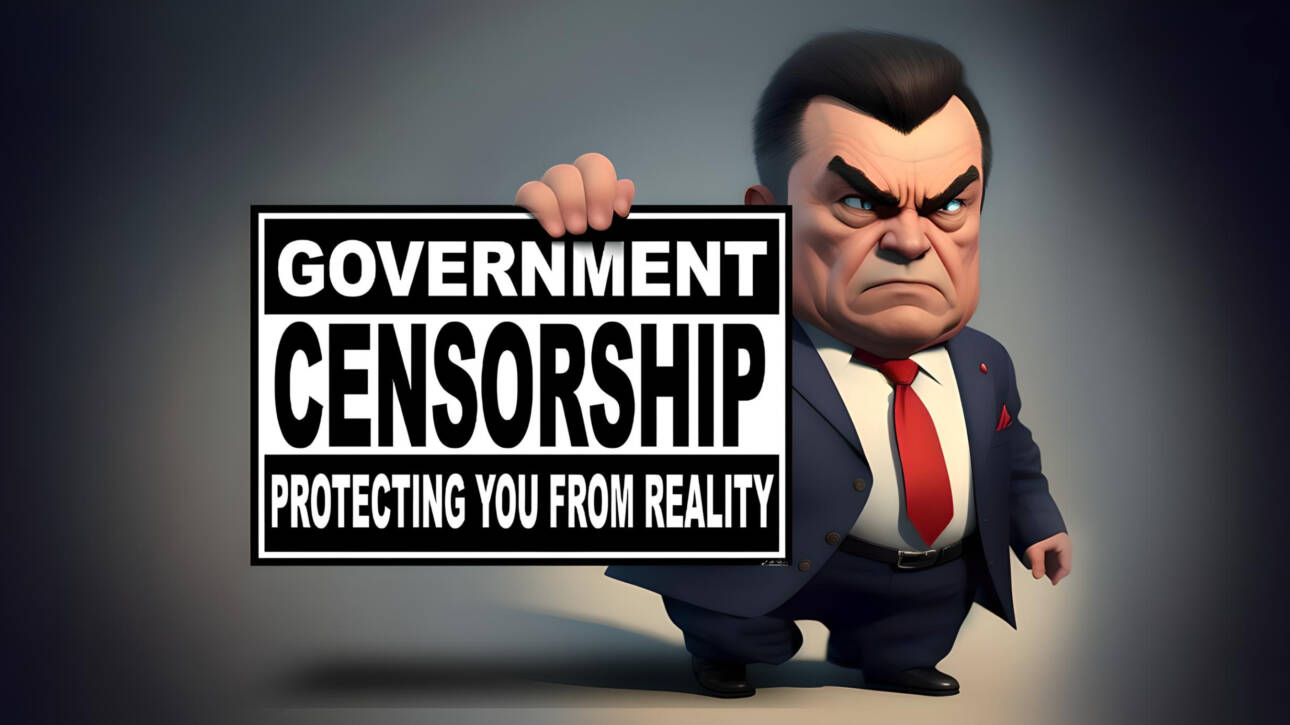
By virtue of the Fourteenth Amendment, the First Amendment’s constitutional right of free speech and intellectual freedom also applies to state and local governments. Government agencies and government officials are forbidden from regulating or restricting speech or other expression based on its content or viewpoint. Although THEY DO IT ANYWAY.

American Constitution

Therefore

The author’s view of censorship by the government is unconstitutional at it’s base. In contrast, when private individuals or groups organize boycotts against stores that sell magazines of which they disapprove, their actions are protected by the First Amendment, although they can become dangerous when taken to extremes.

Censorship and The United States

Censorship is a centuries-old issue for the United States. The importance of intellectual freedom and the freedom of speech is particularly evident in libraries, organizations dedicated to the access and spread of information. Issues regarding censorship and intellectual freedom have even reached the US Supreme Court.

The following essay serves as a history of censorship in the United States, particularly in its libraries, and how the same issues of censorship have now transitioned into the digital age.

Throughout the history of the United States, there are many examples of censorship and censorship related attempts. to subvert Constitutional Law.

Oltmann 2016a, 153

One Example

One seminal example of censorship on the grounds of obscenity involves James Joyce’s most famous work, Ulysses (1922). Prior to the novel’s US publication, the work was serialized in the literary magazine The Little Review. Following this first publication of Ulysses, three issues of The Little Review were seized and burned by the US Postal Service on the grounds that its content was deemed “obscene.” 

The Book Ulysses 1995

A complaint was made regarding a particular chapter that was published in the magazine, and after a trial the publishers were convicted and fined (Baggett 1995). Publication of Ulysses in the United States stopped for more than a decade (Gillers 2007). It was not until the federal district court case United States v. One Book Called Ulysses in 1933 that the novel could legally be published in the United States (Gillers 2007). 

Court Proceedings 

In the ruling for the case, Judge John M. Woolsey established the important notion that an entire work, rather than just a portion of it, should be considered for the work to be declared obscene (United States v. One Book Called Ulysses 1933).

The Supreme Court Ruling

The Supreme Court ruled in the case Roth v. United States (1957) that obscenity was not protected under the First Amendment. It also developed what came to be known as the Roth test for obscenity, which was “whether to the average person, applying contemporary community standards, the dominant theme of the material, taken as a whole, appeals to the prurient interest” (Roth v. United States 1957, at 489). 

The Roth Test

However, the Roth test definition of obscenity proved difficult to apply. In the Supreme Court case Jacobellis v. Ohio (1964), which addressed whether states had the right to ban films they deemed obscene, Justice Potter Stewart famously stated that while he could not precisely define pornography, “I know it when I see it” (Jacobellis v. Ohio 1964, at 197).

The Roth test was eventually expanded with the case Miller v. California (1973). Under the Miller test, a work is obscene if Freedom of speech is particularly pertinent to libraries, as it “encompasses not only a right to express oneself, but also a right to access information” (Oltmann 2016a, 153).

The First Amendment

The First Amendment is a common argument made by advocates against the act of censorship (Lambe 2002). As Pinnell-Stephens (2012) writes, “The basis of intellectual freedom in libraries lies in the First Amendment” (xi). However, interpretation of the First Amendment is not concrete, and throughout US history, courts have attempted to decide what freedoms are actually protected under the First Amendment.

At the highest level, the US Supreme Court has heard many cases dealing with the First Amendment and the freedom of speech, which can also be relevant to libraries since they attempt to provide an environment of free expression and accessibility.

Obscenity Laws Defined By The ALA

Many definitions of censorship have been proposed over the years. The American Library Association (ALA) defines censorship as a “change in the access status of material, based on the content of the work and made by a governing authority or its representatives. Such changes include exclusion, restriction, removal, or age/grade level changes” (ALA 2016).

Who Decides What’s Offensive?

According to Prebor and Gordon (2015), censorship is “an action utilized in order to prohibit access to books or information items because their content is considered dangerous or harmful to their readers” (28).

Definition of “Offensive”

Knox (2014) describes censorship as “an amalgamation of practices, including the redaction of text in a document, cutting pages out of a book, or denying access to materials” (741). While many definitions of censorship have been used, according to Oppenheim and Smith (2004), “the general sentiment behind most definitions is that something is withheld from access by another” (160).

The term “censorship” comes from The Latin, censere “to give as one’s opinion, to assess.” The Roman censors were magistrates who took the census count and served as assessors and inspectors of morals and conduct.

In contrast to that straightforward definition from Roman times, contemporary usage offers no agreed-upon definition of the term or when to use it. Indeed, even whether the word itself applies to a given controversy in the arts is often vigorously contested.

Here are excerpts of definitions of “censorship” from U.S. organizations and publications with varying views. They are not intended as any composite mega-definition of the term, only as indications of the variety of approaches to this concept.

Censor: One who supervises conduct and morals: as a) an official who examines materials (as publications or films) for objectionable matter; b) an official (as in time of war) who reads communications (as letters) and deletes material considered harmful to the interests of his organization. Censorship: The institution, system or practice of censoring; the actions or practices of censors; esp : censorial control exercised repressively.

Webster’s Dictionary

Merriam Webster’s Collegiate Dictionary
Censorship: The use of the state and other legal or official means to restrict speech.
Culture Wars, Documents from the Recent Controversies in the Arts, edited by Richard Boltons

By Who’s Authority Suggests Motive To Remove?

In general, censorship of books is a supervision of the press in order to prevent any abuse of it. In this sense, every lawful authority, whose duty it is to protect its subjects from the ravages of a pernicious press, has the right of exercising censorship of books.
The Catholic Encyclopedia (a publication of the Catholic Church)

What Is Censorship?

Censorship is the suppression of ideas and information that certain persons, individuals, groups or government officials find objectionable or dangerous. It is no more complicated than someone saying, “Don’t let anyone read this book, or buy that magazine, or view that film, because I object to it!” Censors try to use the power of the state to impose their view of what is truthful and appropriate, or offensive and objectionable, on everyone else. Censors pressure public institutions, like libraries, to suppress and remove from public access information they judge inappropriate or dangerous, so that no one else has the chance to read or view the material and make up their own minds about it. The censor wants to prejudge materials for everyone.

Censorship Is Control by Those “IN Control”

For the ALA, technically censorship means the “The Removal of material from open access by government authority.” The ALA also distinguishes various levels of incidents in respect to materials in a library which may or may not lead to censorship: Inquiry, Expression of Concern, Complaint, Attack, and Censorship.
– The American Library Association

The word “censorship” means “prior restraint” of First Amendment rights by government.

Who Determines the Moral RIGHT?

Morality in Media (Morality in Media is “a national, not-for-profit, interfaith organization established in 1962 to combat obscenity and uphold decency standards in the media.”)

    1. The denial of freedom of speech or freedom of the press.

    1. The review of books, movies, etc., to prohibit publication and distribution, usually for reasons of morality or state security.
      Oran’s Dictionary of Law

Censorship Stifles Creativity and Individuality

Censorship: official restriction of any expression believed to threaten the political, social, or moral order.

Encyclopedia.Com

Censorship – the prevention of publication, transmission, or exhibition of material considered undesirable for the general public to possess or be exposed to.

Fast Times™

Fast Times’ Political Dictionary (Fast Times is “a nonpartisan publication on contemporary world affairs & media with no political, ideological, or religious affiliation of any kind.”)

Government Censorship:

Once the cyclical suppression, banning, expurgation, or editing by an individual, institution, group or government that enforces or influences its decision against members of the public of any written or pictorial materials which that individual, institution, group or government deems obscene and “utterly” without redeeming social value,” as determined by “contemporary community standards begins, the end result is book burning and social communism.”

Professor of Journalism and Mass Communication, University of North Carolina

Excerpt By Chuck Stone


Leave a comment

Ft. Worth Texas Based Crypto Exchange Firm Sues The SEC For Overreach Tactics

SPONSORED BY

Fort Worth-based crypto company Lejilex and lobbying group Crypto Freedom Alliance of Texas (CFAT) claim the SEC has asserted jurisdiction over the industry without a “clear statutory mandate.”

The Texas cryptocurrency company and an industry group sued the U.S. Securities and Exchange Commission (SEC) on Wednesday, saying the regulator has overstepped its authority with malice and forethought, targeting and unconstitutional bureau overreaching and they’re asking a judge to rule that digital assets traded on exchanges are NOT securities.

Lejilex wants the court to rule that listing pre-existing tokens will not violate securities laws.
“We wish we were launching our business instead of filing a lawsuit, but here we are,” Lejilex co-founder Mike Wawszczak said in a statement.

Lejilex says it seeks to run a cryptocurrency platform called Legit.Exchange. The company formed last year said it plans to list digital assets including those the SEC has deemed securities in lawsuits against Coinbase (COIN.O),the largest cryptocurrency exchange in the U.S., and Binance, the world’s largest crypto exchange.

A spokesperson for the SEC did not immediately reply to a request for comment. Both Coinbase and Binance have denied the SEC’s numerous allegations.

CFAT asked the court to block the SEC from suing its members, and said the agency’s assertion of jurisdiction over digital assets has made it harder to convince Texas lawmakers to embrace “sensible crypto based policies.”

A judge in July rejected the argument that an ongoing commitment is required to make an asset a security in the SEC’s case against Ripple Labs. Another judge overseeing the regulator’s lawsuit against Terraform Labs found the “major questions” doctrine does not apply to the cryptocurrency industry. Both of those cases were brought in New York.

They asked the court to apply the “major questions” doctrine, which lets judges invalidate executive agency actions of “vast economic and political significance” unless Congress clearly authorized them.

The group launched last year and counts Coinbase and venture capital firm Andreessen Horowitz’s a16z crypto fund as members.CFAT and Lejilex argue the SEC is wrong to classify digital assets as “investment contracts” because they create no ongoing commitment between creator and purchaser.

The new lawsuit filed in federal court in Fort Worth. This new case was assigned to Judge Reed O’Connor, an appointee of Republican former President George W. Bush with a track record of ruling in favor of conservative litigants challenging laws and regulations governing gun control. Which this brings the industry’s fight with the regulator under the jurisdiction of the 5th U.S. Circuit Court of Appeals. Also noting that more than TWO THIRDS of the judges on the appeals court were appointed by Past Republican Presidents, which makes it the favored venue for challenges to the SEC under the current Disorganized, Corrupt and Seriously Questionable Biden Harris Administration.

Paul Clement, former U.S. Solicitor General represents the plaintiffs.

Leave a comment

Apex NFT Card™ Services Will Provide Payment Solutions In The Realm™ For Merchants

Last Updated: April 20, 2024
 ZenChip PRIME Corp.™ | The Realm™ | Apex Card Services™
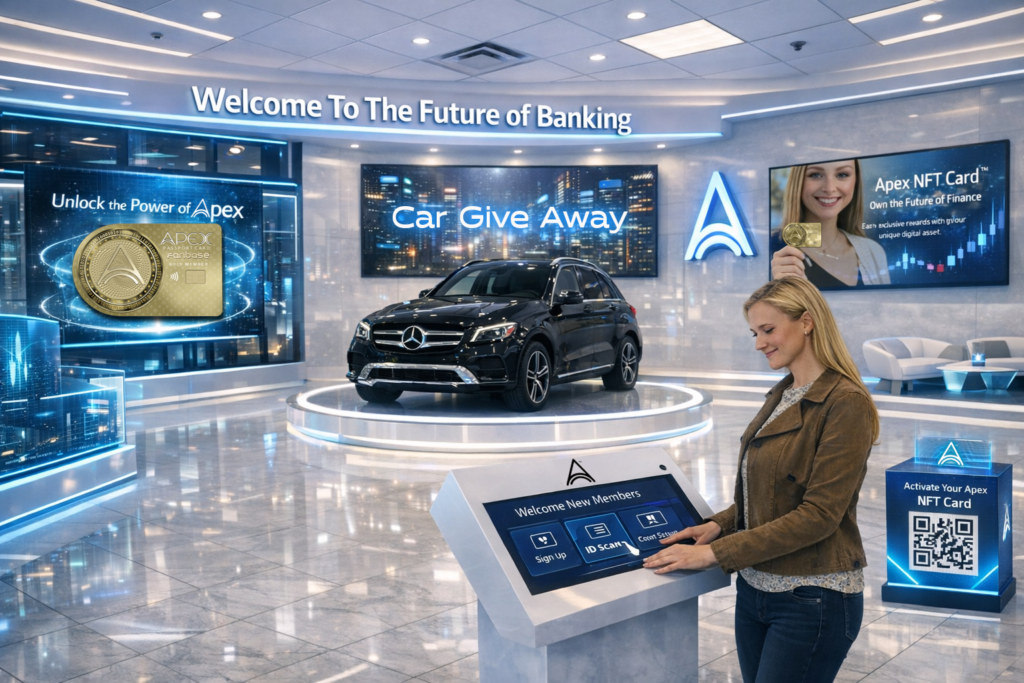
 

The Apex NFT Card service is the cornerstone of an all-encompassing financial ecosystem that seamlessly integrates into The Realm, revolutionizing the way payments, commerce, and banking operate in this immersive artificial reality. Here’s a detailed explanation of how it’s fully integrated for Payments, Merchants, Vendors, and Customers, powered by a Patented Point of Sale system, Digital Banking, and Fanbase rewards:

1. Payment System Integration

The Apex NFT Card transforms financial transactions in The Realm by creating a secure, flexible, and user-friendly payment solution that supports a broad range of virtual and real-world activities. Here’s how it works:

  • Multi-Currency Payments:
    Apex NFT Card holders can transact in virtual currencies (native to The Realm), NFTs, or traditional FIAT currencies. For instance, users can purchase digital goods such as skins, artwork, or collectibles directly within The Realm, while simultaneously using the same card to pay real-world bills outside the virtual world.

  • Frictionless Checkout:
    The card’s integration with The Realm’s patented Point of Sale (POS) system ensures a seamless checkout experience. By linking with user wallets and accounts, it offers instant processing of payments for everything from merchant services to ticketed events. The user-friendly interface eliminates delays and creates a unified payment journey.

  • Blockchain Security:
    Every transaction is secured on blockchain technology, ensuring transparency, security, and immutability. This eliminates issues like double spending or fraud, making payments in The Realm as safe as traditional banking systems.

2. Merchant Benefits

Merchants operating within The Realm gain access to a range of tools that enhance their ability to reach, engage, and transact with customers:

  • Universal Acceptance of the Apex NFT Card:
    Merchants can accept payments directly through the card in any supported currency, whether it’s virtual or FIAT, removing the barriers of limited payment systems. This flexibility boosts sales and customer satisfaction.

  • Point of Sale (POS) System for Immersive Commerce:
    The patented Apex POS system is tailored specifically for The Realm. Merchants can embed it within virtual storefronts, pop-up shops, or event spaces, creating a fully immersive shopping experience. From selling virtual real estate to exclusive NFTs or hosting branded virtual events, the POS system handles all transactions effortlessly.

  • Merchant Dashboard and Analytics:
    Merchants have access to a comprehensive dashboard that tracks transactions, customer activity, and revenue in real time. These insights allow businesses to refine their strategies and offer personalized experiences.

3. Vendor Empowerment

Vendors play a critical role in The Realm’s economy, and the Apex NFT Card equips them with a suite of tools for efficient operations:

  • Digital Contracts and Instant Settlements:
    Vendors can set up smart contracts for services rendered within The Realm. Payments are automatically released upon contract fulfillment, ensuring smooth and dispute-free transactions.

  • Support for NFT-Based Products:
    Vendors dealing in NFTs—whether selling digital art, collectibles, or licensing virtual assets—can leverage the Apex Card’s support for NFT transactions, enabling instant and secure exchanges.

  • Access to Fanbase Rewards Ecosystem:
    Vendors are connected to the Fanbase system, where every transaction contributes to loyalty programs and rewards. This fosters customer retention and incentivizes purchases, benefiting vendors with increased sales and engagement.

4. Customer-Centric Features

The Apex NFT Card puts users at the center of the experience, enabling them to navigate The Realm with unparalleled convenience and rewards:

  • Digital Banking Integration:
    Customers enjoy full-fledged digital banking services directly through the Apex Card interface. They can manage their earnings within The Realm—whether generated through employment, business ownership, or asset trading—and convert them into real-world currencies seamlessly. This means they can earn a living in The Realm while paying real-world expenses, all from one card.

  • Fanbase Rewards System:
    With every purchase or transaction, customers earn rewards within the Fanbase ecosystem. These rewards can be redeemed for perks like discounted event tickets, exclusive NFTs, or premium upgrades within The Realm. The reward system enhances customer engagement and provides tangible benefits for their loyalty.

  • Customizable Financial Control:
    Users have the ability to set financial goals, manage spending, and review transaction histories directly through the Apex Card platform. The integrated system allows them to make informed decisions about both virtual and real-world finances.

5. Fanbase Rewards Integration Across the Ecosystem

The Fanbase rewards system is tightly woven into every aspect of The Realm’s economy, amplifying the value of the Apex NFT Card. Here’s how:

  • For Payments:
    Every transaction—whether a small purchase or a significant investment—contributes to Fanbase rewards. The more customers engage in The Realm, the more they benefit from this loyalty program.

  • For Merchants and Vendors:
    Merchants and vendors offering Fanbase-compatible services gain additional visibility and customer preference, as buyers are incentivized to shop with Fanbase rewards. This creates a thriving, symbiotic marketplace.

  • Special Events and Exclusives:
    Fanbase rewards can be used to unlock VIP access to exclusive events, premium digital goods, and limited-edition NFTs, fostering excitement and ongoing participation in The Realm.

6. The Apex Card’s Vision: A Unified Financial Ecosystem

The Apex NFT Card isn’t just a payment tool; it’s a cornerstone of The Realm’s financial infrastructure. By integrating seamless digital banking, immersive payment systems, and incentivizing rewards, it empowers users, merchants, and vendors to fully realize the potential of an artificial reality-based economy. The Apex Card serves as the bridge between the virtual and the real, redefining what’s possible in commerce, finance, and engagement.


Leave a comment

E-mail
Password
Confirm Password